A child bites into a chocolate bar, pauses, and winces. A parent notices the hesitation but hopes it is nothing serious. A few days later, brushing time turns into a negotiation. “It hurts,” the child says, pointing to a back tooth. Many parents face this moment. They wonder whether a cavity has formed and whether a dental filling sounds too serious for such small teeth.
When families search for kids dental care, they often carry one quiet question in their minds. Is a dental filling truly safe for my child? Instead of rushing to answer that directly, let us walk through what really happens inside a tiny tooth and why dentists recommend fillings in the first place.
At Dr. Kalamkar's Welldent Family Care, we provide expert kids dental care in Nandanvanunder the guidance of experienced dentists. We ensure that each kid and their guardian is treated with utmost care and comfort throughout their treatment. Guardians and parents often worry about pain, safety, long-term effects, and whether baby teeth even need fixing at all. These concerns make sense. After all, childhood feels delicate.
Why Do Baby Teeth Even Need Attention?
Many parents assume baby teeth will fall out anyway, so a small cavity does not matter much. That idea sounds logical on the surface. However, baby teeth guide permanent teeth into their correct positions. They help children chew properly and speak clearly. They also maintain space in the jaw.
Think of baby teeth like placeholders in a library shelf. If one book goes missing too early, the others tilt and shift. Later, when a new book arrives, it struggles to fit into place. In the mouth, this shifting can create crowding or misalignment.
When decay develops and grows deeper, it can lead to:
- Tooth pain
- Sensitivity to hot or cold food
- Difficulty chewing
- Swelling or infection in severe cases
A dental filling stops that progression. It removes the damaged portion and seals the tooth so bacteria cannot continue their quiet work.
What Happens During a Dental Filling for Children?
Many parents imagine loud drills and discomfort. In reality, modern pediatric dentistry focuses heavily on comfort and safety.
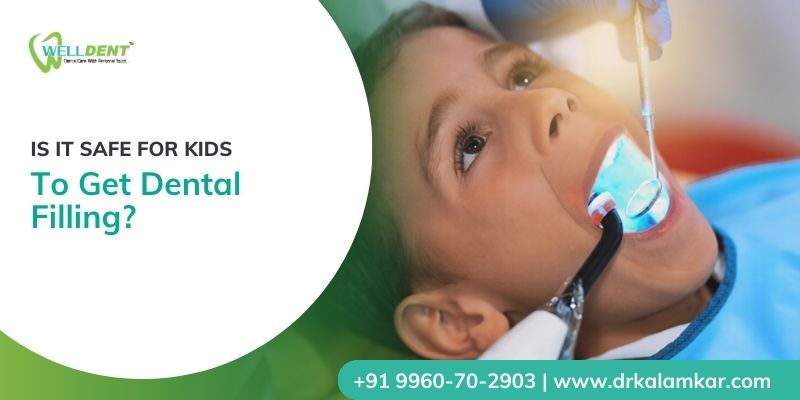
A dentist begins by carefully examining the tooth. If decay affects only the outer layer, the procedure remains simple and quick. The dentist gently removes the decayed portion and cleans the area. Then they place a tooth colored filling material that restores shape and strength.
The entire process often takes less time than a typical cartoon episode. Dentists use local anesthesia when needed, and children usually tolerate it very well. Pediatric dentists also use child-friendly communication techniques that reduce anxiety and build trust.
At Dr. Kalamkar's Welldent Family Care, the team emphasizes prevention first. However, when decay appears, they focus on early intervention rather than waiting for complications.
Is It Truly Safe for Kids?
Dentists design pediatric fillings with safety as the top priority. Today, most dentists use composite resin materials for children. These materials bond directly to the tooth structure and match natural tooth color. They do not contain harmful levels of mercury and meet strict dental safety standards.
Beyond materials, safety also depends on timing. Treating a small cavity early prevents deeper infection. Once decay reaches the pulp, a child may require more complex treatment like pulp therapy. Addressing the issue early often means a shorter, simpler appointment.
You can think of it like patching a tiny tear in a school uniform. Fix it early, and the fabric stays strong. Ignore it, and the tear grows, making repair more complicated.
Parents sometimes worry about anesthesia. Dentists calculate dosage carefully based on a child’s weight and health history. When administered by trained professionals, local anesthesia remains safe and effective.
Signs Your Child Might Need a Filling
Children do not always describe dental pain clearly. They may simply avoid certain foods or chew on one side. Watch for subtle changes such as:
- Complaints of tooth sensitivity
- Visible dark spots or holes on teeth
- Food is getting stuck frequently
- Bad breath despite brushing
- Irritability during meals
Routine dental checkups for kids dental care in Nandanvan at our clinic can help catch many cavities before symptoms appear. Regular visits allow dentists to monitor enamel health and guide preventive steps.
How Fillings Protect More Than Just Teeth
When decay lingers, bacteria can travel deeper and cause infection. In rare but serious cases, untreated dental infections can affect overall health. A simple filling blocks that pathway early.
Children also gain confidence when they chew comfortably and smile freely. Oral health influences social interactions and speech development. Fixing a small cavity supports much more than tooth structure.
Some parents worry that dental work might create fear. Interestingly, children often respond positively when adults explain procedures calmly. Dentists use age-appropriate language and gentle techniques. Many kids leave the clinic feeling proud of their bravery.
Prevention Still Leads the Way
While fillings remain safe, prevention always stays better than treatment. Parents can reduce cavity risk through consistent habits:
- Brush twice daily with fluoride toothpaste
- Supervise brushing until around age eight
- Limit sticky and sugary snacks
- Encourage rinsing after meals
- Schedule regular dental visits every six months
Fluoride strengthens enamel and helps resist acid attacks. Dentists may also recommend sealants for molars to protect deep grooves from trapping food particles.
Prevention works like applying sunscreen before stepping into harsh sunlight. It does not guarantee zero risk, but it greatly reduces damage.
The Bigger Picture of Pediatric Dental Safety
Dental science continues to evolve, and modern pediatric dentistry focuses on minimally invasive techniques, accurate diagnosis, and child-friendly care. Dentists receive specialized training to treat young patients safely and gently. A dental filling does not signal failure. It reflects a proactive step to protect your child’s oral health. When parents understand the process and its purpose, fear naturally begins to fade.
If your child mentions tooth sensitivity or you notice a dark spot, act early to prevent bigger concerns later. At Dr. Kalamkar's Welldent Family Care, the team prioritizes early detection, safe materials, and a calm environment that supports both science and empathy. Consulting experts at our clinic for kids dental care in Nandanvan helps you gain clarity and a personalized treatment plan. A small repair today can protect your child’s smile and build confidence for years to come.
FAQs
- Is a dental filling painful for children?
Dentists prioritize comfort during pediatric procedures. They use local anesthesia when necessary to numb the area and prevent pain. Most children feel slight pressure but no sharp discomfort. The procedure typically finishes quickly, which reduces anxiety. Proper communication and reassurance also help children stay calm throughout the visit.
- Are tooth colored fillings safe in kids dental care?
Tooth colored composite fillings meet strict safety standards and work effectively in children. Dentists choose materials that bond securely to enamel and restore function. These fillings do not contain harmful substances when used appropriately. Pediatric dentists evaluate each child’s dental condition before recommending treatment. When performed by experienced professionals, the procedure remains safe and reliable.
- What happens if we delay treating a cavity in a child?
Delaying treatment allows decay to spread deeper into the tooth structure. This progression can cause pain, infection, and difficulty eating. In advanced cases, the child may require more complex procedures like pulp therapy or extraction. Early treatment keeps the procedure simple and protects surrounding teeth. Timely action supports long-term oral health.
- How long do fillings last in baby teeth?
Fillings in baby teeth can last several years, depending on oral hygiene and chewing habits. Since baby teeth eventually fall out naturally, the filling often lasts until that time. Good brushing and regular dental visits extend the life of the restoration. Dentists monitor the filling during routine checkups to ensure it remains intact. Proper care helps maintain strength and function.